- Hand Reading Mini-Course -
DISEASES - Sydney line (long head line) & syndromes with a gene abnormality
INDEX (P1) - INTRO (P2) - HISTORY (P3-7) - DISEASES - (P8-13) - PSYCHIATRY (P14-25) - PSYCHOLOGY (P26-32) - CONCLUSION (P33-34)

Hand Diagnostics & Diseases:
Sydney line (long head line) & syndromes with a gene abnormality!
Group 4: syndromes with an abnormality on a specific gene.
Important examples of group 4 syndromes are:
1 - De Lange syndrome (gene: unknown).
2 - Rubinstein-Taybi syndrome (gene: 16p13.3).
3 - Williams-Beuren syndrome (gene: 7q11.23).
4 - Smith-Lemi-Opitz syndrome (gene: 7q32.1)
5 - Prader-Willi syndrome (gene: 15q11-q13).
6 - Soto syndrome (gene: unkown).
7 - Russell-Silver syndrome (gene: unknown).
The scientific literature presents 'phantom pictures' for: De Lange syndrome, Rubinstein-Taybi syndrome, and Williams-Beuren syndrome.
DERMATOGLYPHIC RESEARCH ON THE ETIOLOGY OF DISEASES
In the first paragraph of this course was described that nowadays dermatoglyphic research is merely focussed on studying the etiology of complex diseases and syndromes. The etiology of many diseases is influenced by a large number of genes combined with environmental influences.
Regarding the environmental influences one can discriminate teratogen influences from exogen influences:
Teratogen influences start being manifest during pregnancy. Examples of teratogen influences are: (high) age of the mother, food, stress, (infection) diseases, medicine, drugs, chemicals, and radiation danger.
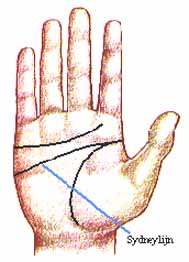
Figure B-6: the Sydney line - the long head line ends near
the ulnar side of the palm (the side of the little finger).
SUGGESTION FOR FURTHER READING:
The Sydney line: a fascinating hand mark!
A brand new masterclass in scientific hand reading is also available here:
Decoding The Language of The Hand:
how to find 36 conditions with just 54 major hand signs!
Common used synonyms for hand reading are: palmistry - palm reading - hand analysis - chirology - chiromancy - chirognomy